
Systems · Knowledge & Publishing
The books are the output. The engine is the work.
Keep what you learned. Thirteen finished titles for people who build and restore vehicles — professionally typeset, fillable and shipped. Every one came out of a single engine built to turn hard-won knowledge into something that outlives the person who worked it out.

What they are
The record of a build, kept properly
This is the preservation half of what Knowlton does, in the least technical form it takes. No general model knows what happened to your engine, in what order, with which parts, or what went wrong the first time.
A vehicle build lives in a shoebox: receipts, a notebook, a phone full of photographs, and a great deal in somebody's head. When the car is sold, or the builder is not around to ask, most of it is gone.
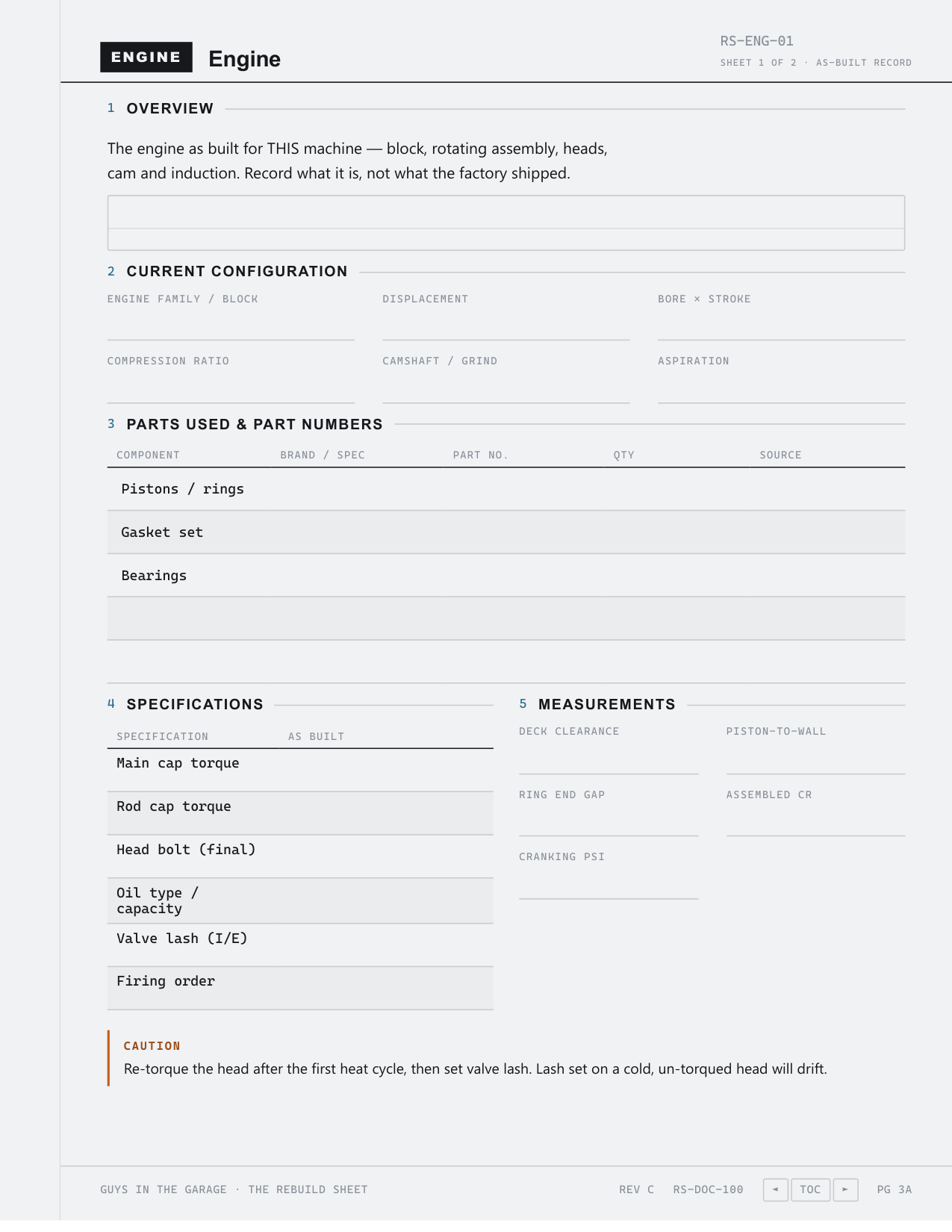
These are the books that stop that happening. Every vehicle system gets the same structure, in the same order, every time — what it is, how it is configured now, the parts that went in with their numbers, the specifications, the measurements taken, and the things that catch people out. Fill them in as you go and you finish with a document that is worth something to the next owner, the next mechanic, or the judge at a show.
One block is the reason the whole structure exists: For Next Time — what came apart badly, what goes back differently, what not to repeat.
The range
Thirteen titles, finished and on sale
The books
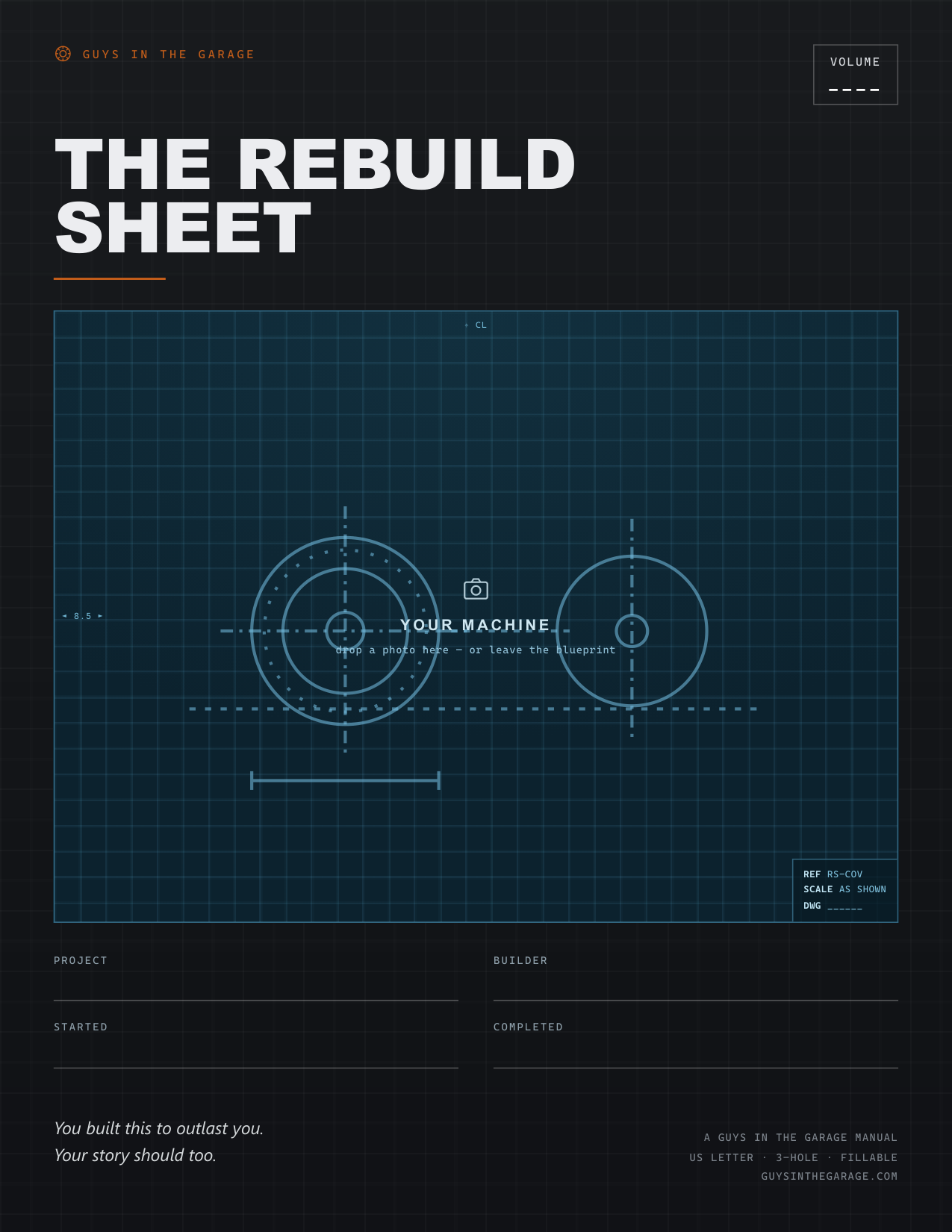
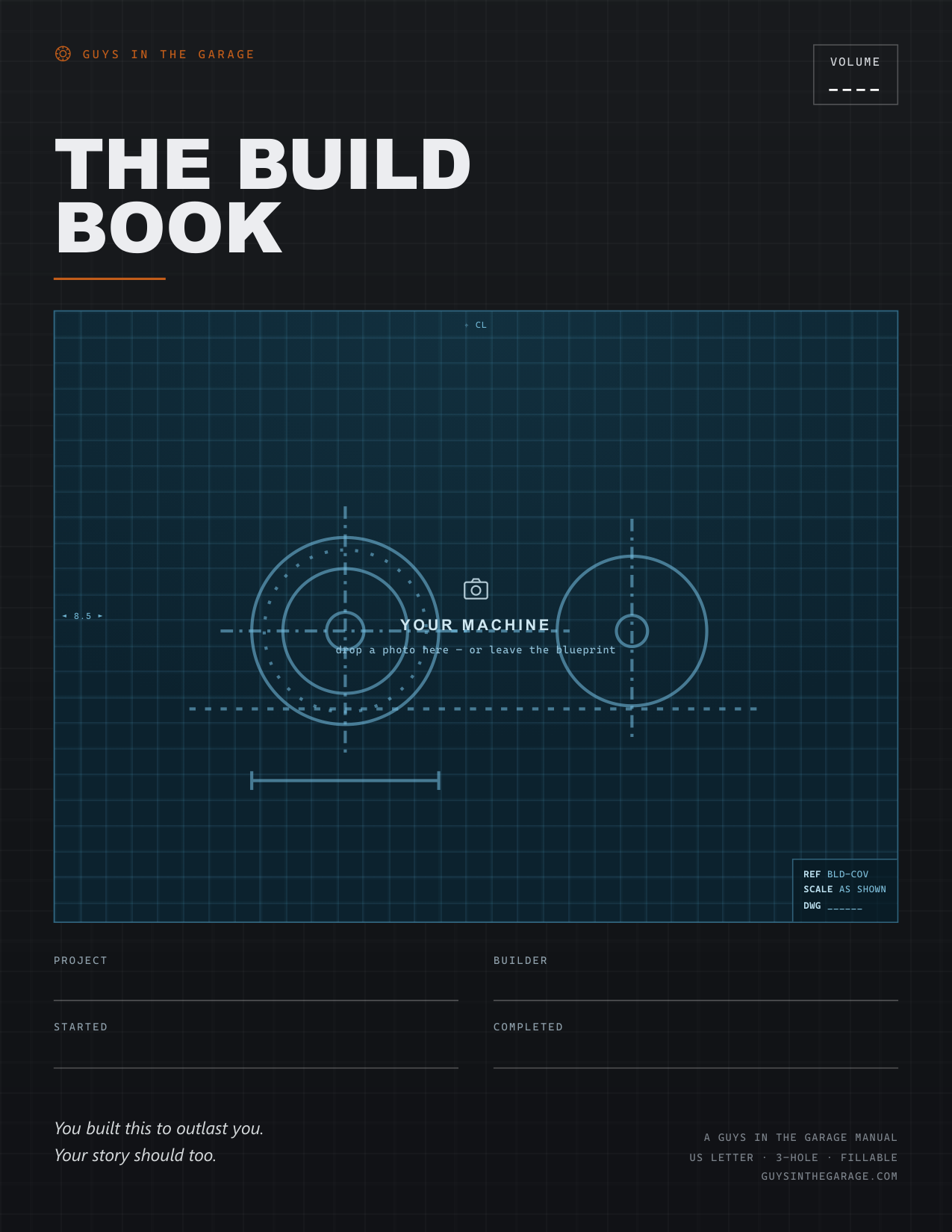
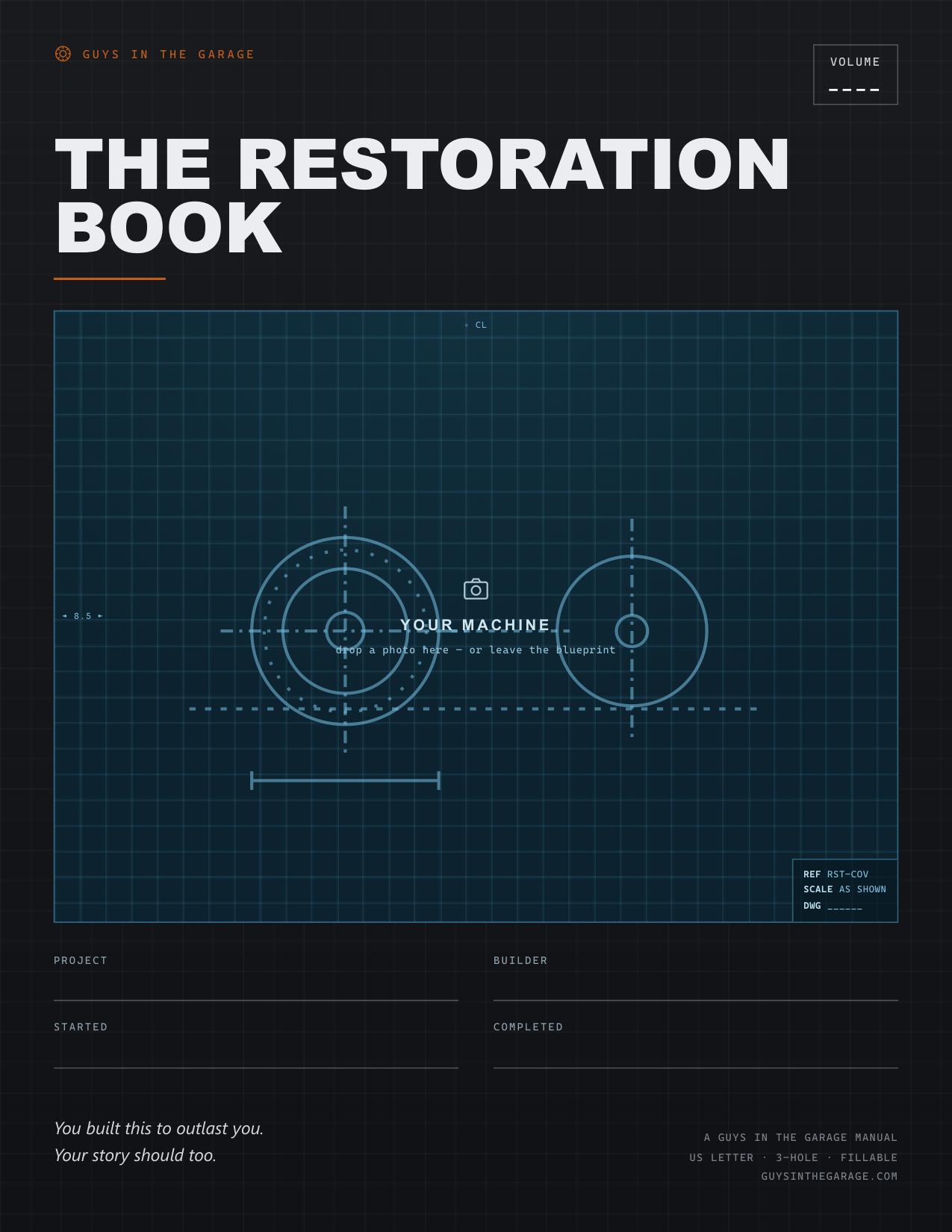
The Rebuild Sheet, The Build Book and The Restoration Book — in car and motorcycle editions. The motorcycle set is a genuinely different systems list, not the car set with the badges filed off: forks, primary drive, final drive, jetting, rake and trail.
The packs
An Expansion Pack for builds that outgrow the book, and shop forms for the jobs that recur. Bought once, printed as often as the garage needs them.
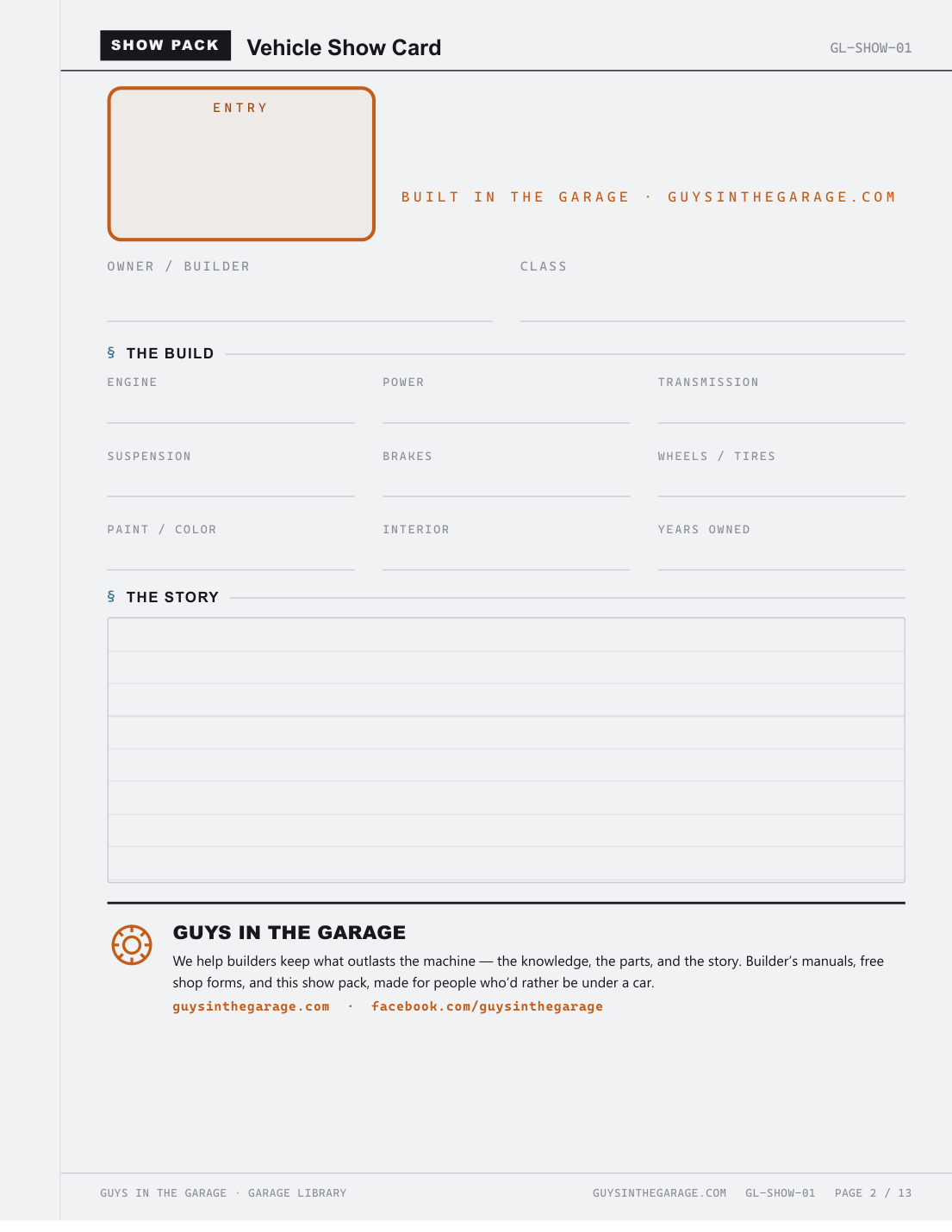
The Show Pack
Everything needed to run or enter a car or bike show — windshield cards, entry forms, judging sheets. Free to nonprofits.
How it's made
One engine, one standard, thirteen products
None of this was laid out by hand. A single generator produces every title from one design system and one written engineering standard — the standard says what a conforming page must contain, and a page missing any required block cannot ship.
Two things about it are worth knowing. The books are fillable: the fields are real PDF form fields, placed exactly where the design puts them, so the document works on a laptop in the house as well as on paper in the garage. And the layout is stable: adding a page in the middle of a long book re-flows everything after it without breaking a cross-reference or a field.
The result is that the thirteenth title cost a fraction of the first, and the fourteenth is a data change rather than a project.
Fill on a computer, or print at home on US Letter and write on it. The engine is proven; the retail side of the operation is early.
Commercial status
First commercial product
The Garage Library has produced its first real customer sale.
One customer isn’t a business. It is, however, no longer zero. It is recorded here at exactly that size because the alternative — describing it as traction, or as a publishing business — would be the first dishonest sentence on this site.
What it does establish is narrow and real: the engine produces artifacts somebody was willing to pay for, through a storefront that took the money, without a publisher or a production team in the path. That is the only claim being made.
Operator-attested. Unlike the engineering claims elsewhere on this site, this one rests on the operator’s report of a sale rather than on a reproducible artifact, and is labeled accordingly.
Why it matters
Proof that the method makes products
Garage Library began as a test of a single question: can accumulated knowledge — the kind that takes decades in a garage to acquire — be turned into professional documentation and a finished product without a publisher, a design studio or a production team?
Thirteen titles later, the answer is yes. The engine is the transferable part; the editorial content is the part that took the decades. It is the same engine argument that runs through the rest of Knowlton: build the machine that makes the thing, and the second thing is cheap.
Attribution
Who publishes these
The Garage Library titles are published by Guys in the Garage, and every page carries that mark in its running footer. The copyright in the artifacts is theirs. What this page describes is the engineering behind them.